India is such a complex country with a huge population, a checkerboard of cultures, languages, climatic regions, external influences, and cultural differences.
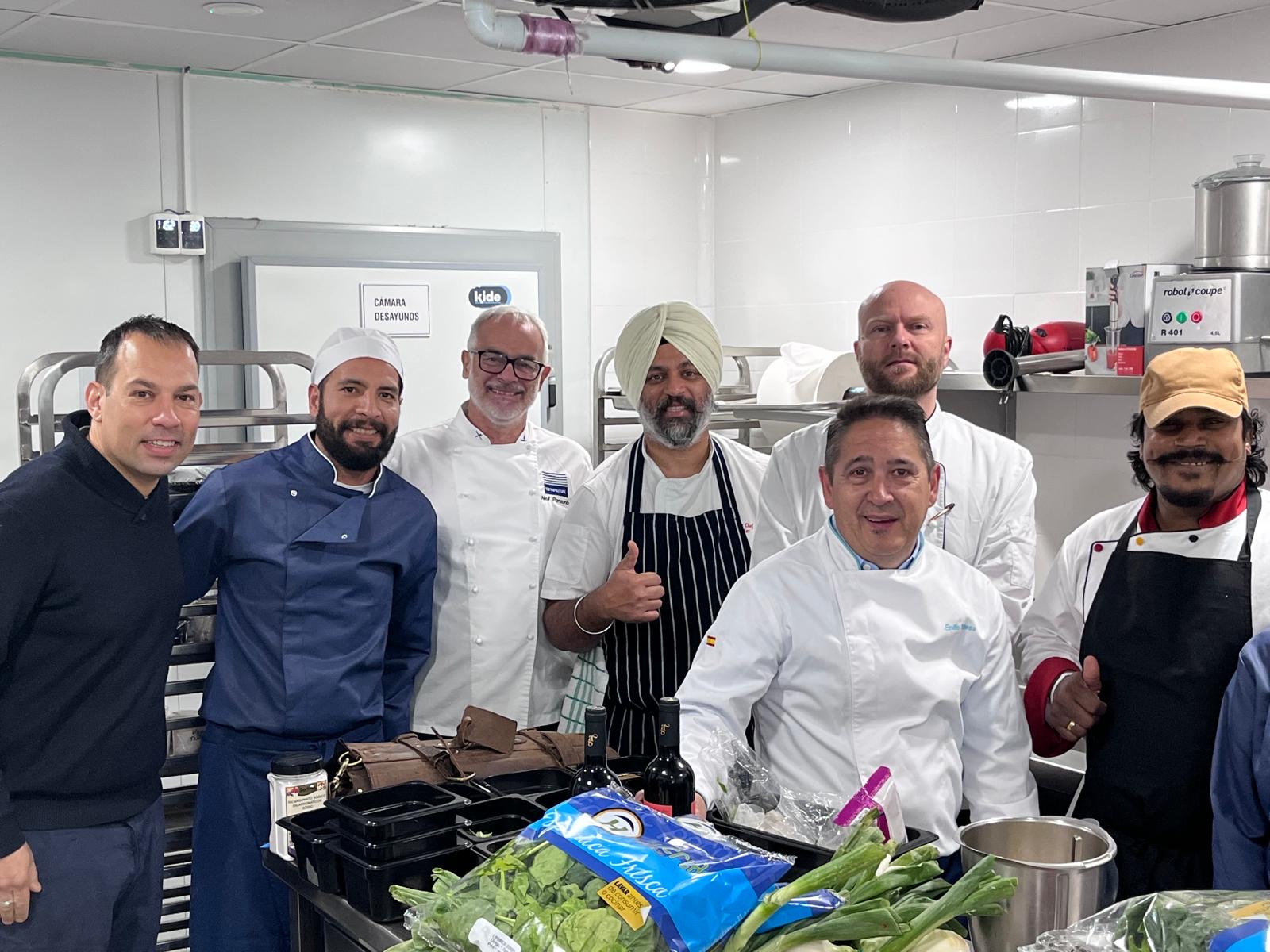
Here are some of the golden rules needed as a starting point. Many of the following I’ve amassed during my years in the kitchen, and many were picked up last week at the conference.
Build the flavours:
- Temper the oil:
Temper (“fry, do not burn”) the whole spices in the oil; this releases their flavours and is the initial building block. The oil is part of the flavour balance of the dish, not like Western cooking.
- Add the aromatics:
Onion, garlic, ginger—this is very important. The onions need to be properly cooked; they need to be golden brown and cooked all the way through. This takes time. The onions basically need to be so cooked that they are liquefied. Indian home kitchens may not have our Western food processors; the onions are also the sauce-thickening agent. Do not burn the onions.
- Add the ground spices
- Add the tomatoes; cook until the oil separates
- Add liquids and/or main ingredients
Spicy taste: “All Indian food is chilli hot”
Not all Indian dishes are “chilli” hot; spicy must be balanced—sweet, sour, hot, creamy. One balance element complements and enhances another.
Tadka:
This is a term we professional chefs need to learn and practice. It gives the final taste orientation of the dish. It is the practice of frying aromatic herbs and spices (e.g., caraway, cumin, mustard seeds, garlic, ginger) in oil and spooning it over the dish upon serving.
Temper:
Temper is another Indian cooking term that we should come to grips with—the practice of frying whole spices in oil. This is the first step to building Indian flavours.
Fresh herbs and ingredients:
Use fresh herbs and ingredients; grind your own spices from whole spices.
Dried herbs and spices:
All dried herbs and spices should be dry roasted in a pan before use in a dish or grinding. This includes fenugreek leaves, bay leaves, etc.
Kashmiri chilli powder:
Use deep red Kashmiri chilli powder as standard chilli powder for colour and taste. Avoid culturally incorrect chilli powders (e.g., ancho, BBQ chilli, Mexican, etc.).
Green or red chilli:
Many recipes call for green or red chilli; these are probably not your regular supermarket chillies. Look for your local Indian shop, check their fruit & veg counter, and see what they have on offer. If it’s too strong, use less or toughen up.
Basmati rice:
Rice, like everything else, is subject to quality and price. Most of the rice in our supermarkets is driven by price; quality doesn’t factor into the equation.
I learnt during the conference that the best basmati rice is “Stella Basmati 1121”—it’s not a brand, it’s a quality grade.
Stella 1121 is an extra-long grain basmati; when cooked, it’s firm with non-sticky individual grains.
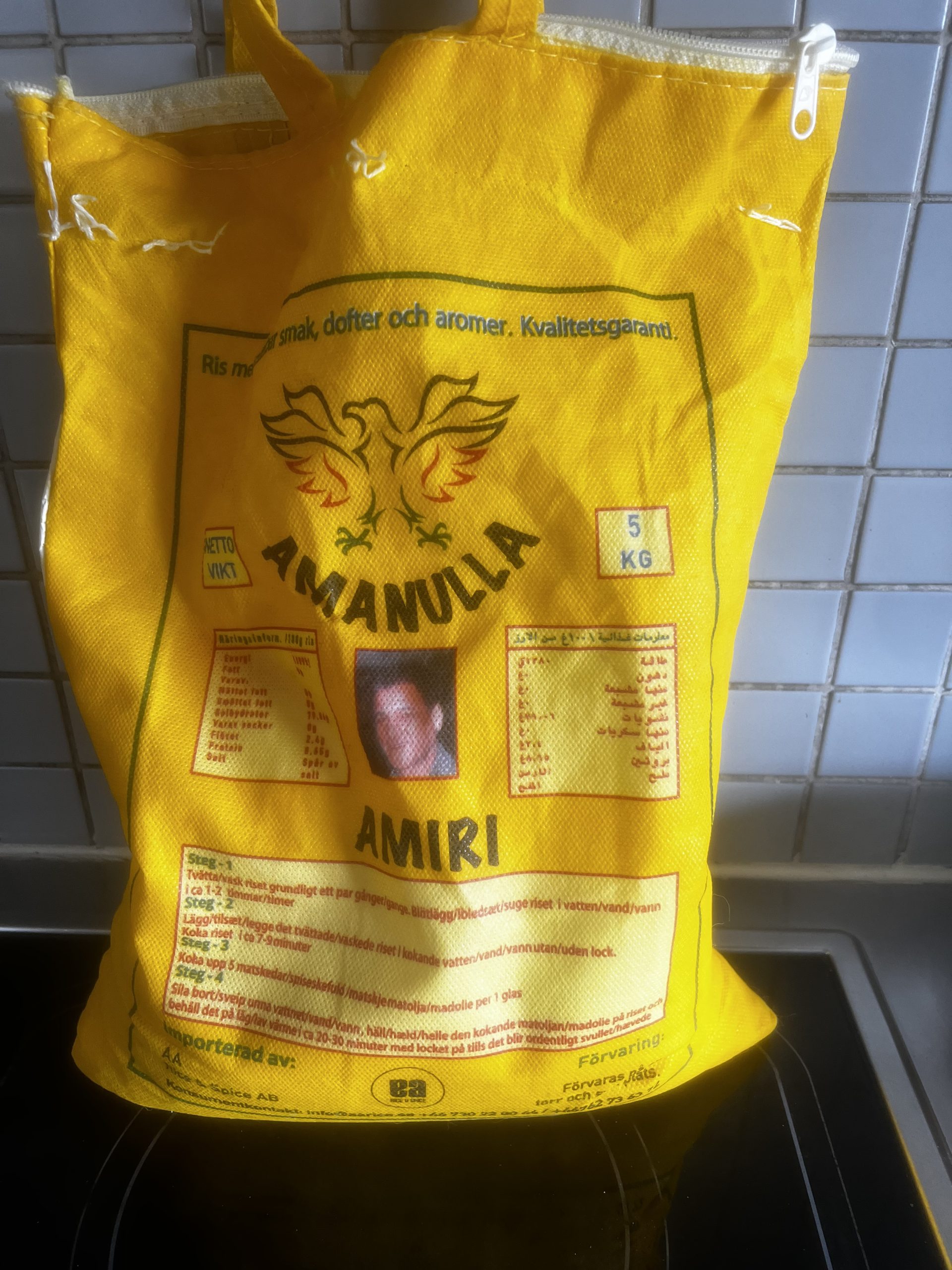
Often rice from India & Pakistan comes in a 5 or 10 kg bag. Indians tend to eat more rice than us Westerners, but it keeps well. Follow the instructions on the bag.
I buy the 5 kg bag at home. I have also given the 5 kg bag as a Christmas or housewarming present—more practical than flowers. And do they appreciate it? Who gives a shit.
Cooking rice:
Rinse the rice under running water.
Heat ghee; lightly toast the rice.
Add water; cook covered.
The grains of rice should be separate and not sticky.
Precooked rice:
Some dishes are made with cooked rice.
Wash the rice as normal.
Add to boiling water. NB: the water needs to be as salty as the ocean, so taste the water and add more.
Cook the rice to 70%, strain, and use hot as per recipe (e.g., biryani), or refresh and use as needed.
Curry powder:
There is no curry powder in India; all Indians make their own spice blending’s, marinades, and masalas as per the recipe.
Taste the dish constantly:
The flavour of slow-cooked Indian dishes develops during the cooking process. Many meat dishes use cheaper cuts or slow-cooked sauces.
If it’s too acidic, add a little sweetener.
If it’s too spicy, add yoghurt or butter.
If it’s too bland, add salt or a key spice.
Develop your taste together with the dish.
Finish with fresh herbs like coriander and mint, maybe a squeeze of lemon or dried spices fried in oil. The fried spices are called a “tadka” and function just like our beurre noisette.
Indian sauces:
Indian sauces are often called gravy (“I wonder where that comes from”), and sometimes some of us uninitiated call them red, green, white, etc. gravies. Regional and cultural differences can vary every 200 km, so comparatively our Western-style mother sauces have no similar nationwide groupings in India.
Onion tomato gravy – red sauce
Tikka masala gravy – yellow sauce
Korma gravy – white sauce (yoghurt/cream, thickened with cashew nuts)
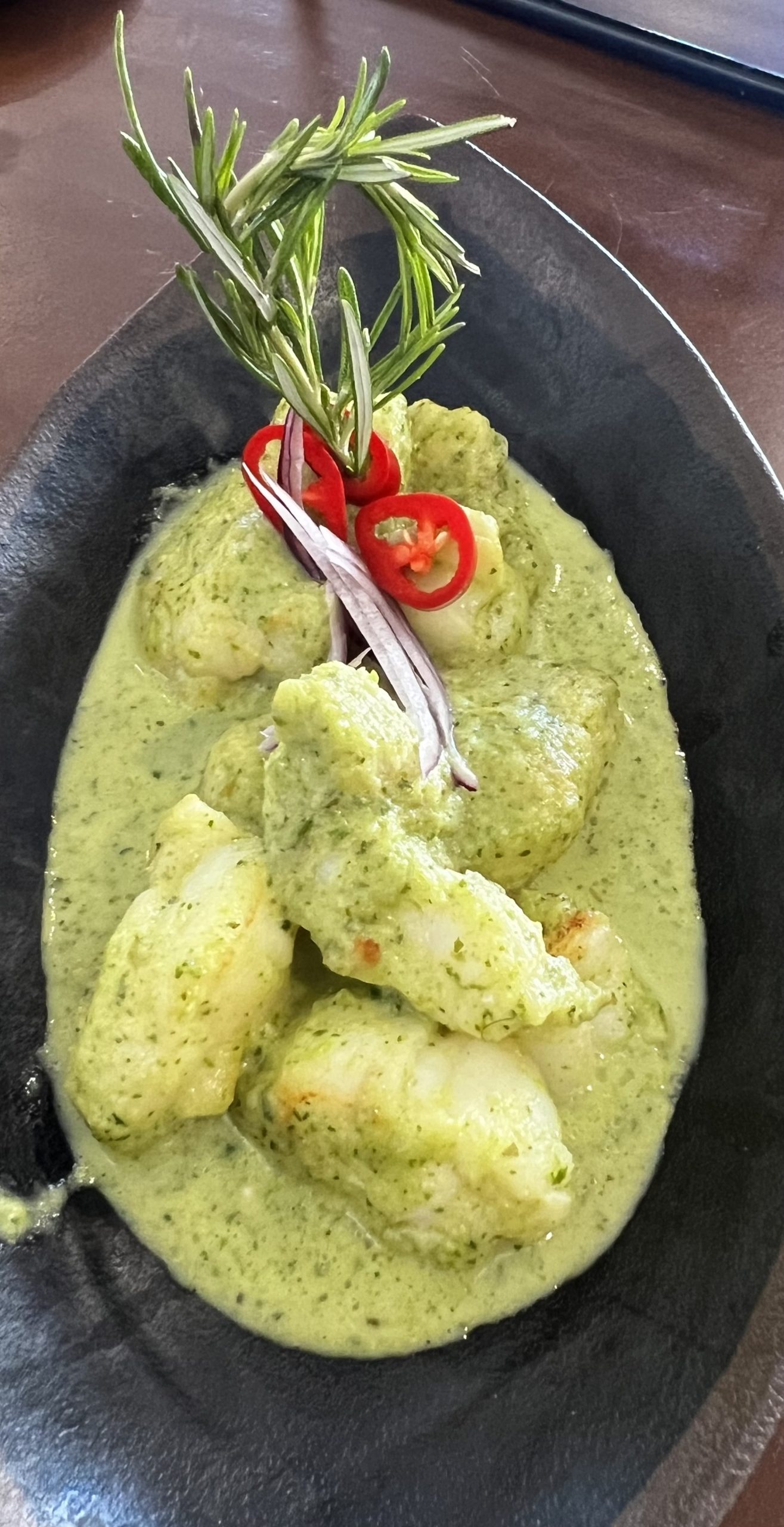
Saag gravy – green sauce (spinach-based sauce)
Makhan gravy – butter sauce, more buttery than tikka masala
Vindaloo gravy – brown sauce, spicy, sometimes brutal
Coconut gravy – South Indian style