An Australian Icon

Homemade Ginger Beer

Nothing brings back childhood memories more vividly for me than homemade ginger beer. It wasn’t just the taste—it was the whole ritual: the feeding of the ginger beer plant, the slow anticipation as the bottles fermented, every day during fermentation and storage we had to check if any of the corks had started to lift due to gas pressure and push the corks back in again. And of course, there was the inevitable risk for an midnight explosions. Our ginger beer plant was always close at hand on the kitchen windowsill, and we kids used to argue over whose turn it was to feed it.

Bottled fermentation took place in the pantry at room temperature. The bottles would often pop their corks, and sometimes one would burst entirely, spraying sticky ginger beer everywhere. When that happened in the middle of the night, it was all hands-on deck to clean up the mess. We all knew that a bottle explosion meant the ginger beer was finally ready to drink. For us and for many Australian families this was a recuring summer tradition, marking the end of the school year and the beginning of the holidays.

Ginger beer became a colonial staple in Australia, and it still has a deep cultural footprint today. It arrived with British settlers in the late 1700s and early 1800s, who found the ingredients cheap and plentiful. Ginger travelled well, sugar was abundant, and yeast cultures were easy to keep alive. As a result, ginger beer quickly became a refreshing go-to drink in the Australian heat.

Old Australian cookbooks and Country Women’s Association collections frequently feature ginger beer recipes, each slightly different depending on the family who passed them down. Neighbours and relatives traded ginger beer plants, compared batches, and gifted starter cultures to newcomers. If your plant died, someone down the street could always give you a scoop of theirs. Entire districts sometimes traced their ginger beer culture back to a single family’s original plant.
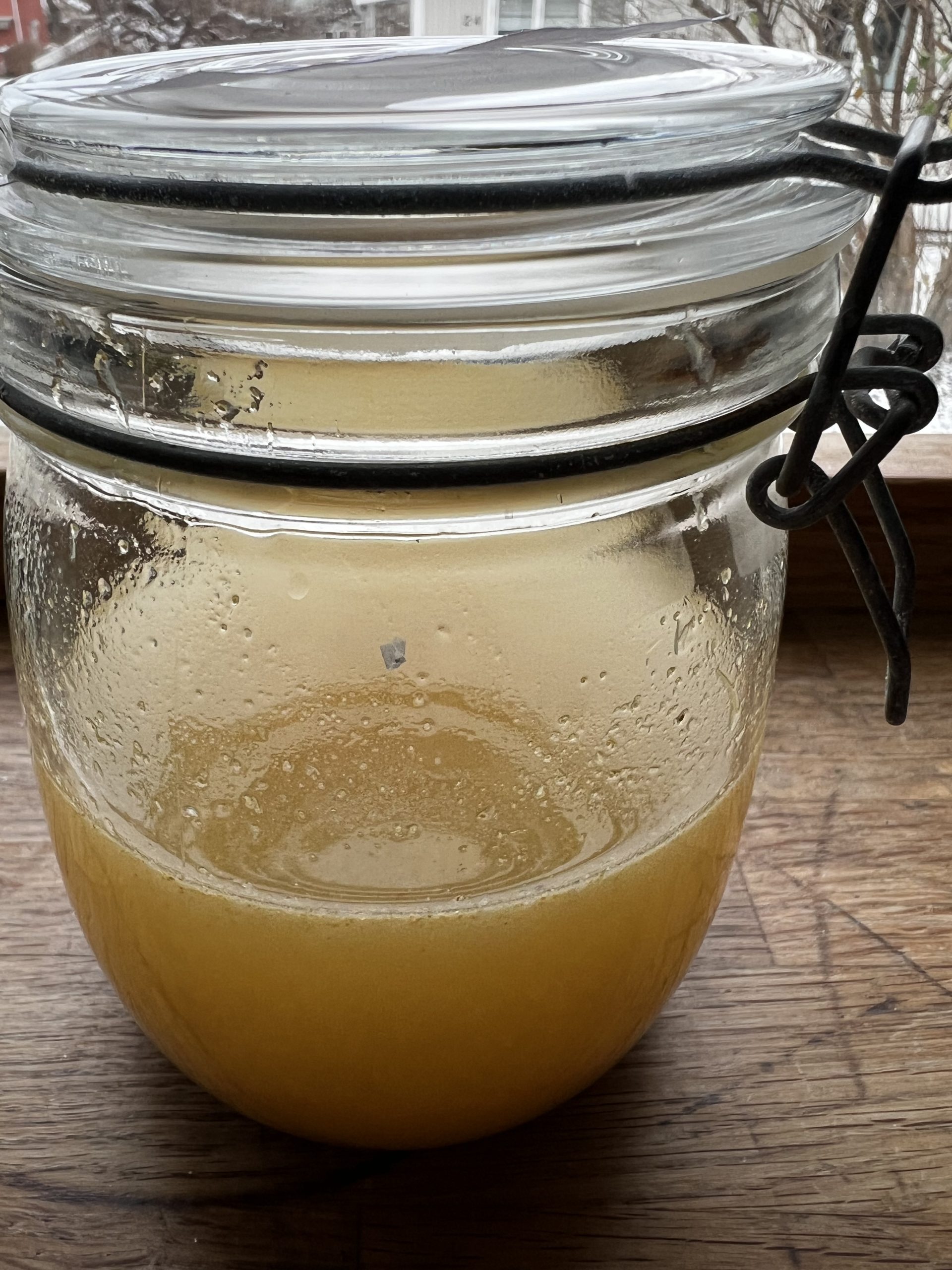
 

ready for feeding, the ginger beer plant The ginger beer plant, just started on day one.

Ginger Beer recipe


Ginger Beer Plant

First make and feed the plant.

Ingredients

  • 8 sultanas
  • Juice of 2 lemons
  • 1 teaspoon lemon pulp
  • 4 teaspoons sugar
  • 2 teaspoons ginger powder
  • 2 cups cold water

Method

  1. Mix all ingredients together and place in an airtight jar.
  2. Feed the plant each day for one week with:
    • 2 small teaspoons ginger
    • 4 teaspoons sugar

Ginger Beer

Ingredients

  • 4 cups sugar
  • 4 cups boiling water
  • Juice of 4 lemons
  • The prepared ginger beer plant (squeezed through a muslin cloth)
  • 28 cups cold water

Method

  1. Dissolve the sugar in the boiling water.
  2. Add the lemon juice and the strained liquid from the ginger beer plant.
  3. Add 28 cups of cold water and mix well.
  4. Bottle in suitable bottles with tight-fitting lids.
  5. Leave to stand 4–5 days before drinking.
  6. I always drop 1 sultana into every bottle before sealing, it gives the extra fizz and tang.


Make a New Batch

  1. Divide the plant into two portions.
  2. Add 2 cups cold water to one portion.
  3. Feed daily with:
    • 2 small teaspoons ginger
    • 4 teaspoons sugar
  4. After one week, use it to make ginger beer as above.
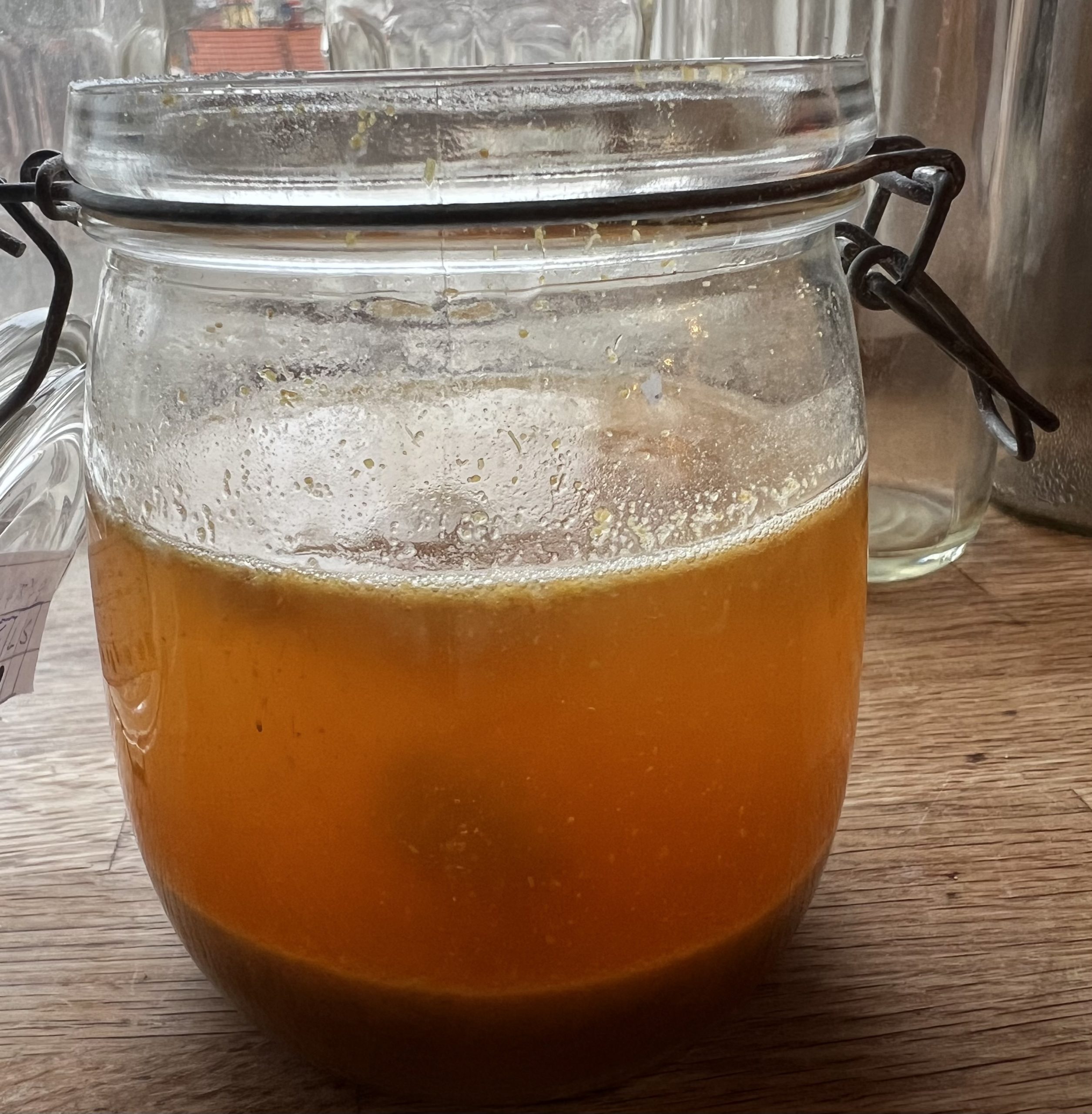
Ginger beer plant, after feeding The ginger beer plant after seven days, ready for the next step.

Ginger beer origins

Ginger beer a colonial export.

Traditional ginger beer dates back to mid-18th-century Britain. It was made from ginger, sugar, water, lemon, and a “ginger beer plant”—a natural symbiotic culture of bacteria and yeast (SCOBY). Stoneware bottles were often used in Britain because they were less likely to burst under fermentation pressure.

A true ginger beer plant isn’t just ginger, yeast, and sugar. It’s a unique SCOBY with its own microbial identity, more like kombucha than a typical brewing yeast. Instead of forming a solid disc, it forms small jelly-like granules. These granules contain specific yeasts and bacteria that give old-fashioned ginger beer its characteristic flavour. Families kept their plants alive for years, just like sourdough starters.

During fermentation:

  • Yeasts consume sugar and produce alcohol and carbon dioxide (creating fizz).
  • Bacteria convert some of the alcohol into acids, adding flavour, tang, and natural preservation.

Traditional ginger beer was lightly alcoholic—generally around 1–2%—unlike most modern commercial versions, which are usually non-alcoholic soft drinks.

Today, homemade ginger beer has made a comeback, fuelled by interest in craft brewing, fermentation communities, and homesteading. Australia remains a world leader in commercial ginger beer, helped by its high-quality ginger, especially from Queensland’s subtropical Sunshine Coast.


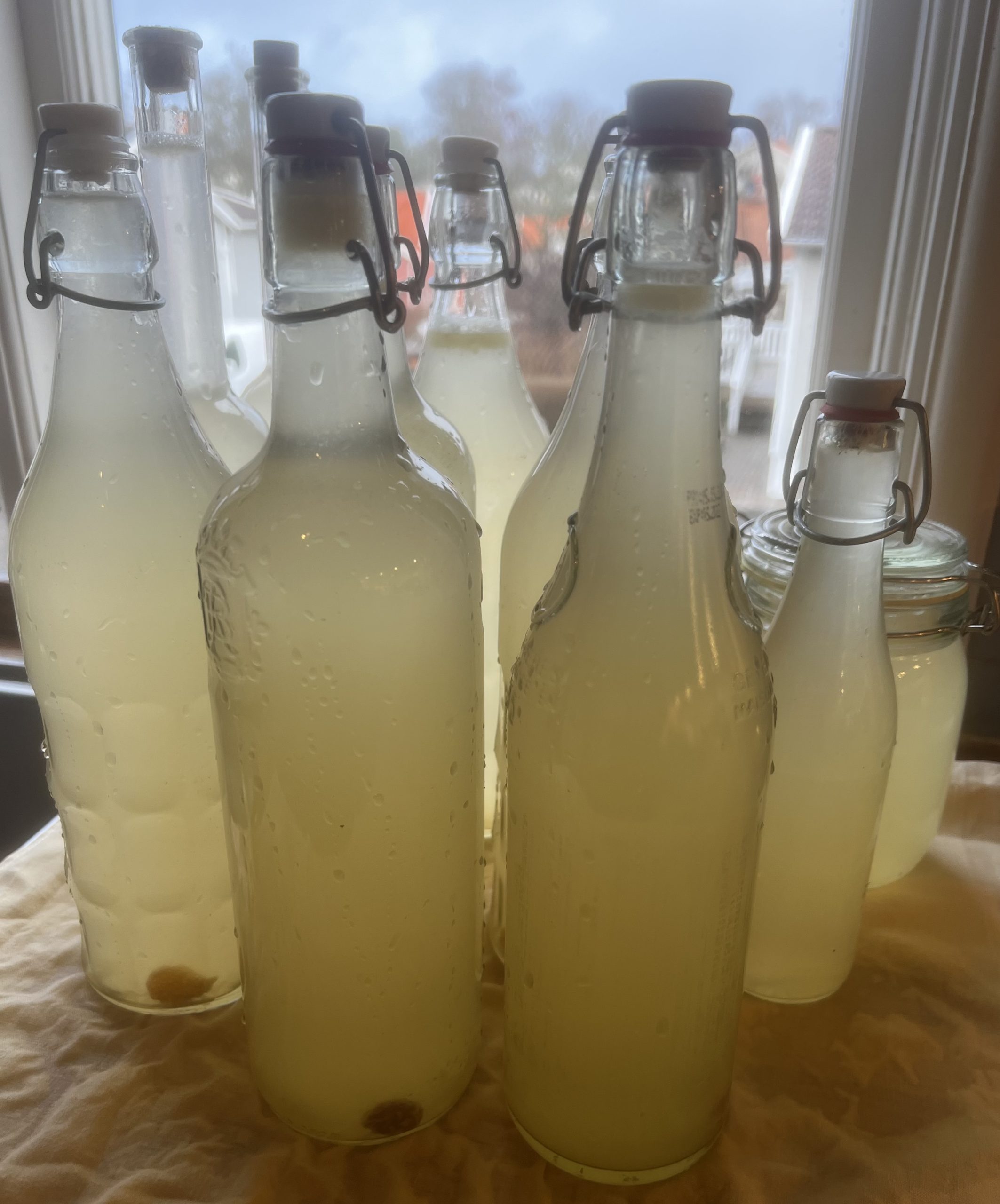
Home made ginger beer Bottled and ready for fermentation.

Comercial ginger beer brands

Major Australian Brands

Bundaberg Ginger Beer

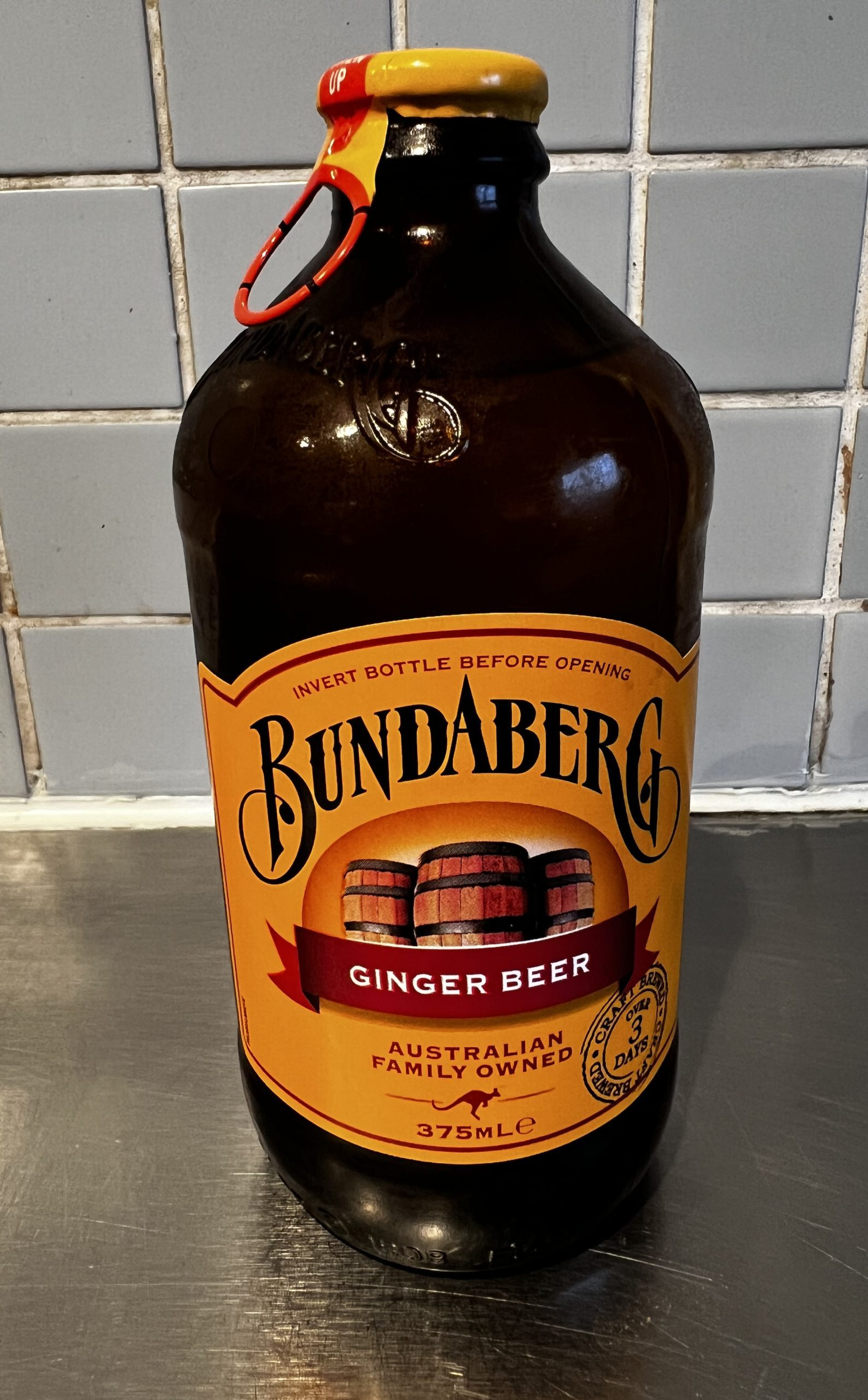
Perhaps the world’s best-known ginger beer, famous for its traditional brewing process, its stubby bottle with the rip-top cap, and its use of real ginger fermented over three days. Bundaberg is sold in more than 60 countries and is a favourite in cocktails like the Moscow Mule and Dark ’n’ Stormy. It helped revive global interest in brewed (not flavoured) ginger beer.

Brookvale Union

Produced by 4 Pines (now part of Lion), Brookvale Union makes a sweet, spicy alcoholic ginger beer popular in Australia’s craft alcohol scene.

Matso’s Ginger Beer

From Western Australia, Matso’s produces a light, crisp alcoholic ginger beer that became especially popular in the 2010s.

CAPI Ginger Beer

A premium craft-style ginger beer known for its cold-pressed ginger, strong spice profile, and popularity in high-end bars.

Worldwide Ginger Beer Today

United Kingdom

Still produces both alcoholic and non-alcoholic ginger beers, from fiery botanical brews like Fentimans to iconic brands like Stone’s and Ginger Joe.

United States

Interest surged with the craft cocktail revival. Popular brands include Reed’s, Barritt’s, Fever-Tree, and Q Ginger Beer.

Caribbean

Ginger beer holds deep cultural significance. Jamaica produces some of the spiciest ginger beers in the world (Grace, D&G). In Bermuda, Barritt’s is practically a cultural emblem.

Africa

In South Africa and Zimbabwe, “gemmer bier” is a traditional homemade drink—cloudy, milky, and lightly fermented. Brands like Spar-letta Stoney offer a spicier, more intense flavour profile.

Asia
Japan, Thailand, and other countries produce ginger beer mainly for cocktail culture, though imports dominate.

How Modern Commercial Ginger Beer Is Made

Brewed ginger beer:

  • Real fermentation with ginger, sugar, and yeast
  • Takes several days
  • Cloudy, complex, spicy
  • Alcohol reduced for non-alcoholic versions
  • Examples: Bundaberg, Fentimans

Carbonated soft-drink style ginger beer:

  • Ginger flavourings or extracts
  • Carbonated water and sweeteners
  • Clearer, lighter, more stable
  • Examples: Schweppes, Canada Dry


Bundaberg Ginger Beer Bundaberg Ginger beer in its Iconic Australian stubby "bottle" a well known brand in many countries.

The finished product


But no matter how many brands appear on the shelves, nothing ever quite matches the homemade version—the kind that sits quietly fermenting in the pantry until a bottle pops and the whole house jumps to life. That first sip, after weeks of waiting, still tastes like childhood, summer, and the unmistakable joy of tradition.

Facebook
Twitter
LinkedIn
Pinterest
Email